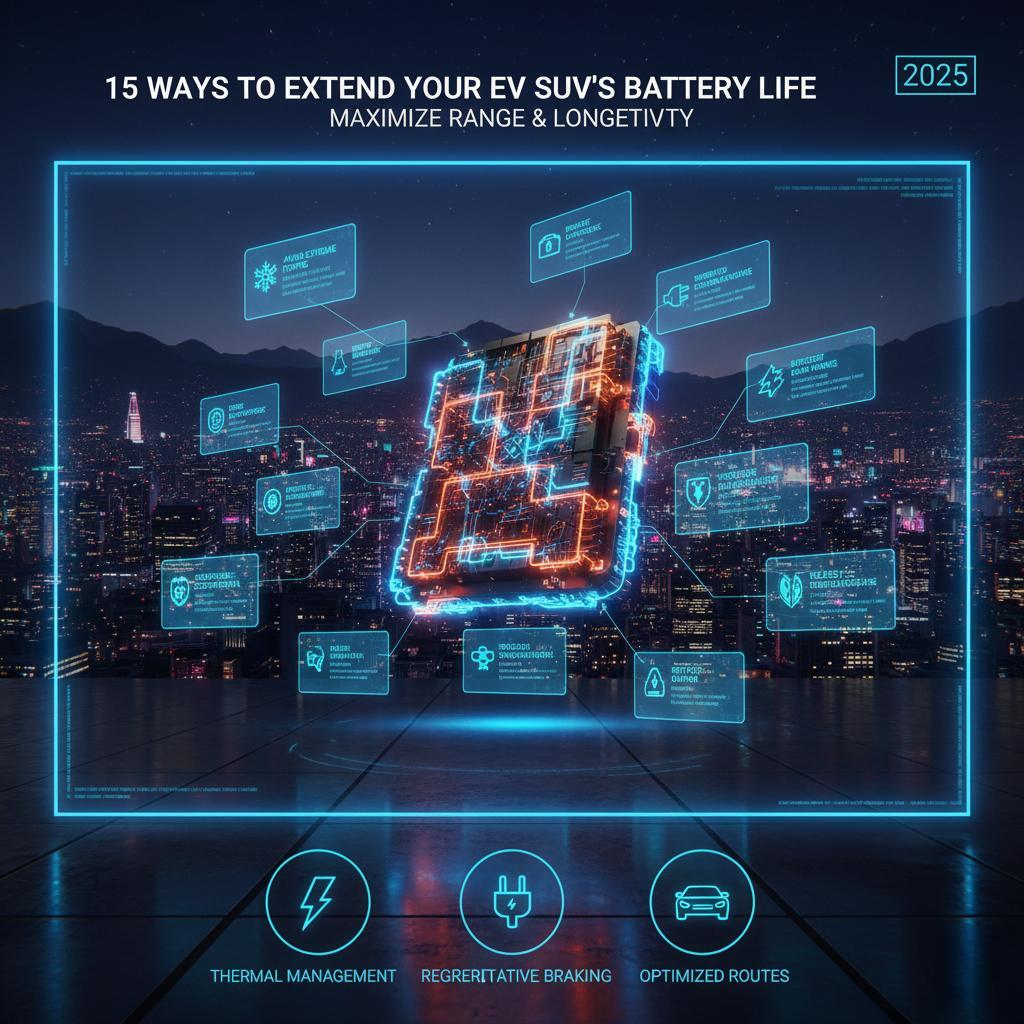
Quick take: Baby the battery, not just the car. Keep it cool, avoid sitting at very high/low states of charge, favor Level-2 charging for daily use, and use smart charging to finish just before you leave.
1) Live in the “middle” of the battery
What to do: For daily driving, aim to operate mostly between 20–80% SoC (state of charge).
Why it helps: Spending long hours near 0% or 100% accelerates aging. The mid-band is easier on lithium cells.
2) Save 100% for trips
What to do: Charge to 100% only before long drives, and depart soon after reaching full.
Why it helps: High voltage at 100% is fine briefly, but letting it sit full (especially in heat) speeds degradation.
3) Don’t dwell near empty
What to do: Avoid parking the car for hours below 10% SoC; plug in or add a short top-up.
Why it helps: Very low SoC increases stress and reduces buffer for temperature extremes.
4) Use scheduled charging
What to do: Set your wallbox/app so charging finishes near your departure time.
Why it helps: Minimizes time spent at high SoC and can align with cheaper off-peak rates.
5) Prefer Level-2 at home
What to do: Use AC Level-2 for daily charging; reserve DC fast for trips.
Why it helps: Fast charging is convenient but adds heat and voltage stress. Lower-rate charging is gentler.
6) Precondition while plugged in
What to do: In cold or hot weather, preheat/cool the cabin and battery before driving—while connected to the charger.
Why it helps: Reduces on-road energy draw and avoids cold-charge risks (like lithium plating).
7) Be temperature-smart
What to do: Park in shade or a garage; use cabin pre-cool/pre-heat; avoid back-to-back fast charges on scorching days.
Why it helps: High temps accelerate chemical aging; lower temps when charging improve longevity.
8) Mind your wheels and tires
What to do: Keep tires properly inflated, choose moderate wheel sizes, and align the car when needed.
Why it helps: Lower rolling resistance = fewer kWh per mile, meaning fewer charge cycles over time.
9) Drive smoothly
What to do: Use Eco modes, anticipate traffic, and lean on regenerative braking rather than hard stops.
Why it helps: Smoother driving stretches range and reduces the frequency/depth of charge cycles.
10) Stop fast charging at ~80%
What to do: On road trips, charge 10–80% where possible; skip the slow top-off to 100% unless you need it.
Why it helps: The final 80→100% is slower and harsher on the pack; two shorter sessions can be kinder (and often quicker).
11) Keep software up to date
What to do: Install OTA updates from your manufacturer.
Why it helps: Updates can refine thermal management, charging curves, and BMS (battery-management system) accuracy.
12) Use the car’s battery-care settings
What to do: Enable charge limits, departure timers, battery care/comfort modes, and winter mode if offered.
Why it helps: Built-in safeguards automate the healthy patterns outlined here.
13) Store at 40–60% if leaving it parked
What to do: For multi-week storage, park around 40–60% SoC, check monthly, and keep it cool/dry.
Why it helps: Mid-SoC storage is ideal; top up briefly if it drifts too low.
14) Keep the cooling system healthy
What to do: Follow service intervals for battery coolant, cabin filters, and thermal system checks.
Why it helps: Proper heat management protects cells during charging and spirited driving.
15) Be selective with accessories
What to do: Remove roof boxes/racks when not needed and avoid heavy, power-hungry add-ons.
Why it helps: Extra drag and weight burn more energy, increasing charge cycles over the battery’s life.
Quick checklist (save this)
-
Daily limit set to ~80% ✔
-
Trip days: charge to 100% and go ✔
-
Prefer Level-2 at home; DC fast for trips ✔
-
Precondition while plugged in ✔
-
Park cool/shaded when possible ✔
-
Tires at spec; avoid oversized wheels ✔
-
Smooth driving + regen ✔
-
Updates on, battery-care features enabled ✔
-
Long storage at ~50% ✔
Bottom line
Battery longevity is mostly about temperature, time at extreme SoC, and charge rate. Keep it cool, stay in the mid-band for daily use, and treat fast charging as a travel tool—not a daily habit. Your EV SUV will stay healthier, hold range longer, and feel “like new” for more years.